
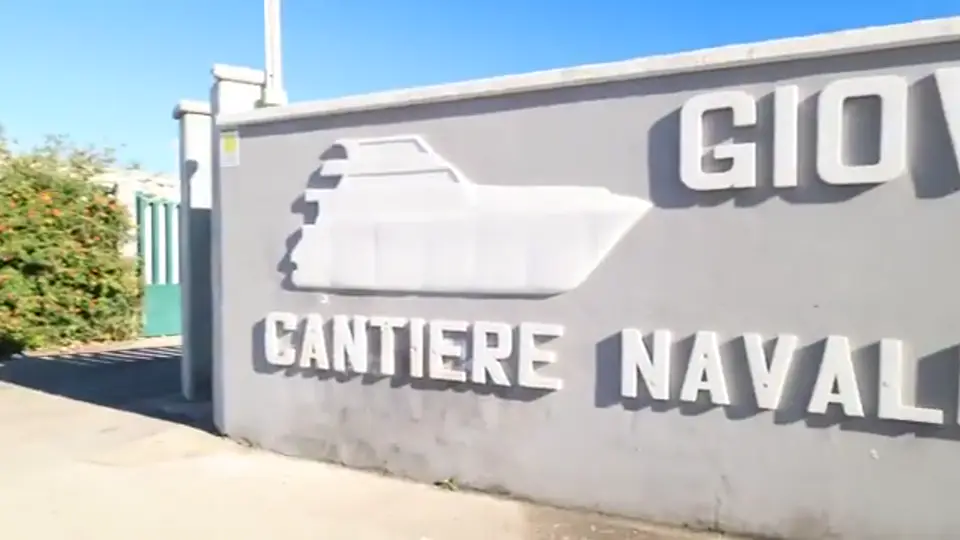
Dott. Giuseppe DaneseCEO of Gruppo Danese
A yachting group, from offline to online markets
Needs mapping, process analysis and a digital transformation path followed step by step. The CEO tells the story in his own words (video in Italian).
As your ISO 56001 consultant, I help you design, implement and run an innovation management system that meets ISO 56001:2024, the certifiable standard of the ISO 56000 family: gap analysis, innovation intent, strategy, portfolio, processes and indicators, up to the certification audit if you choose it. I work as a certified Innovation Manager (UNI 11814), the Italian standard for the professional roles that ISO 56001 refers to for the system’s responsibilities.

Ing. Vito Domenico Amodio
Engineer and Innovation Manager, I work with you directly
The certificate is issued by an accredited certification body, not by the consultant. My job is to build with you a system that works in practice and to prepare you for that audit.
ISO 56001 applies to organisations of any type and size, and the method is the same in Italy and elsewhere in Europe. I work in English with European and international organisations, and with foreign groups that want their Italian sites to follow it. I am based in Lecce: on site in Italy, remotely across Europe.
ISO 56001, published in 2024, does not ask you for an R&D department. It asks you to stop innovating by chance.
You already innovate, but it depends on the owner’s intuition, a key client or the next funding call.
Ideas from engineering or sales disappear between one order and the next, and nobody decides which to pursue.
You want to extend the same discipline to innovation without duplicating paperwork.
Your customers ask you to show a method for innovation.
You need a shared way to select and govern innovation projects across headquarters and local units.
You want to compete where a certified innovation management system makes a difference.
You want to grow with solid processes from day one.
The requirements of ISO 56001 sit in clauses 4 to 10, in the same harmonised structure as ISO 9001. I work through them in your organisation’s language:
Internal and external issues, interested parties, opportunity areas. We write the innovation intent and the scope.
Innovation policy and strategy, roles and responsibilities, culture. I help management lead by example.
Register of risks and opportunities, objectives, initiative portfolio, collaboration with external partners.
Resources, competence, intellectual property, tools and methods, essential documented information.
The five innovation processes, that is identifying opportunities, creating concepts, validating them, developing and deploying solutions, with clear decision points.
Indicators, internal audit (9.2) and management review (9.3).
Nonconformities and continual improvement.
If you already run ISO 9001, ISO 14001 or ISO/IEC 27001, I integrate ISO 56001 into the same structure: one policy, one internal audit, one management review.
I start from how the organisation manages innovation today and how much method is already in place.
With the initial assessment I measure the maturity of your innovation management against the principles of ISO 56000. With the gap analysis I compare each ISO 56001 requirement with what you already do: covered, partial or still to build. The result is a list of priorities. See also the digital assessment and roadmap.
We write intent, scope, policy and strategy, and define roles, portfolio and processes.
We put the system into practice on real initiatives, not paper examples, I train the people involved, and we start the indicators, the internal audit and the first management review; after some months of operation I repeat the assessment with the same criteria to see whether the system is mature. If you choose certification, I help you select an accredited body and support you up to the audit.
These are the four steps of the method I follow in every project.
Overall timing depends on the size of the organisation and on how much method is already in place: I state it after the assessment, in the written proposal.
After certification, the system has to stay alive through the surveillance audits and the recertification. If nobody on your staff can own it, I can hold the role for an agreed period as a temporary innovation manager, on portfolio, indicators and reviews.

Dott. Giuseppe DaneseCEO of Gruppo Danese
Needs mapping, process analysis and a digital transformation path followed step by step. The CEO tells the story in his own words (video in Italian).
against the requirements of ISO 56001.
document.
with selection criteria and decision points.
internal audit programme and management review template.
on innovation culture.
if you choose certification.
Shall we talk for half an hour?
Tell me where you are so I understand what you need. If I can help, I send you a written quote.
| Standard | What it covers | Certifiable |
|---|---|---|
| ISO 56001:2024 (UNI EN ISO 56001:2024 in Italy) | Requirements for an innovation management system | Yes, the organisation |
| ISO 56000:2025 | Fundamentals and vocabulary | No |
| ISO 56002 | Guidance for the management system | No |
| ISO 56003 to ISO 56008 | Guidance on partnerships, assessment, intellectual property, strategic intelligence, opportunities and ideas, measurement | No |
| UNI 11814:2021 | Professional profiles for innovation management (Italian standard) | Yes, the person |
| ISO/IEC 17021-1:2015 | Requirements for the bodies that audit and certify management systems: initial audit in two stages, no management system consultancy by the body (clause 5.2.5) | – |
| Accredia technical circular DC 14/2025 | Italian rules for accrediting certification bodies: three-year certificate, two surveillance audits and one recertification | – |
In the ISO 56000 family, ISO 56001 is the only standard an organisation can be certified against. The others provide the vocabulary and the guidance I use to shape the system around your organisation.
My wider role is described in innovation manager for SMEs, my background on the about page. Guides to the standard clause by clause and to the certification process are available in Italian: ISO 56001 explained and how ISO 56001 certification works.
Can't find your question? Write to me and I will answer.
It is the international standard, published in 2024, that sets the requirements for an innovation management system. It is certifiable: an accredited body can verify that your organisation meets it. It sits alongside ISO 56002, a non-certifiable guidance standard, and ISO 56000, which contains the fundamentals and vocabulary. In Italy it has been adopted as UNI EN ISO 56001:2024.
No. You can adopt ISO 56001 as a model to organise innovation without seeking certification, and decide later. Certification makes sense if you need to demonstrate your method to clients, partners, investors or funders, or if it earns points in tenders and calls. The implementation work is the same.
It depends on how much method is already in place. An organisation with ISO 9001 starts ahead, because the clause structure is the same. One without any management system has to build the basics first. In every case the system must run for some months on real initiatives, with indicators, an internal audit and a management review, before the certification audit.
Yes. Management system standards share the same ten-clause harmonised structure. You can integrate ISO 56001 with quality, environment or information security using one policy, one internal audit and one management review. For groups, the standard also gives headquarters and local sites a shared vocabulary, and we agree which parts are defined centrally.
That the system works, not just that documents exist. The initial audit has two stages: first readiness and scope, then implementation and effectiveness on site. In Italy, Accredia’s rules say the audit covers the five innovation processes, from identifying opportunities to deploying solutions; top management’s commitment; context, risks and interested parties; and the monitoring of initiatives and of the portfolio.
Certification bodies for management systems that hold an accreditation for this specific scheme. In Italy, Accredia sets the rules in technical circular DC 14/2025, under ISO/IEC 17021-1: the certificate lasts three years, with two surveillance audits and one recertification audit. Wherever you are, ask the body for its accreditation for ISO 56001 before signing.
ISO 56001 certification is for organisations, not for consultants. For a person, what can be certified is competence: I am certified as an Innovation Manager under UNI 11814 by Apave Italia CPM, a body accredited by Accredia. I design and implement the system with you. The audit is done by the certification body you choose, which under ISO/IEC 17021-1 may not provide management system consultancy.
There is no single price list. The certification body’s fee depends on its audit days, which are calculated mainly on the number of people working within the scope of the system, and on its day rate. Consultancy depends on your starting point, on the scope and on the phases you entrust to me. I state the effort after the gap analysis, in a written proposal.
Yes. Assessment, design and training work well remotely and in English, so I can support organisations across Europe. With companies in Lecce and Apulia I combine on-site meetings and remote sessions, especially at the start, when it helps to see how people actually work. Travel to other sites is agreed case by case.
Want to know how far your organisation is from an innovation management system? We start with a conversation, so that I can understand your request and prepare a written proposal for the assessment and gap analysis.
Tell me about your company and what you want to achieve. The call is for me to understand your request: if I can help, I prepare a written quote. or fill in the formBook a 30-minute introductory call